Org Charts for AI-Native Companies
May 2026 · Launch + Essay
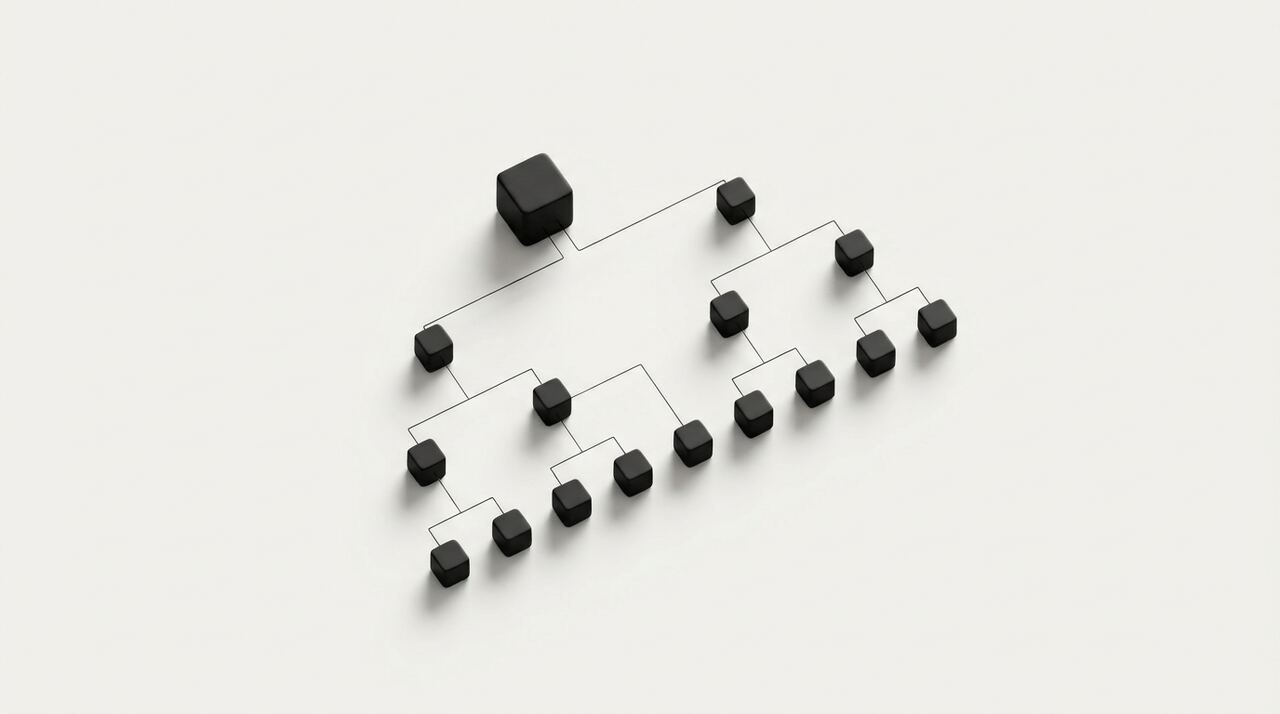
Three of Y Combinator's named partners staked the same territory in a single quarter, from slightly different angles, and most readers missed it.
On the current YC Requests for Startups page: Gustaf Alströmer is asking for AI-Native Service Companies, the kind that “don't sell software, they sell the service,” with insurance brokerage, accounting, audit, compliance, and healthcare administration as worked examples. Tom Blomfield is asking for a Company Brainthat “pulls knowledge out of all these fragmented sources…and turns it into an executable skills file for AI.” Diana Hu is asking for The AI Operating System for Companies, a connective layer that makes a company “entirely queryable” and self-improving.
Three different vocabularies for the same observation. The company is no longer a stack of people doing work. It is a stack of agents doing work, with a thinning layer of humans steering them. The next interesting question is structural. If the agents do the work, what does the org chart look like?
What changes when the work is done by agents
Two things flip in the org chart of an AI-native company that were stable for half a century.
The first: attention is the bottleneck, not capacity. In the 2010s-shape company, a department's ceiling was how many people you could hire. Add headcount, get more output. In the AI-native-shape company, a department's ceiling is how many agent outputs a human can supervise meaningfully in a week. Add another fifty agents and you have not increased capacity; you have increased the load on the one human who still has to sign things. Org charts now optimize for the human attention budget the way they used to optimize for the payroll budget.
The second: the unit of work is the named recurring agent, not the FTE. The agent has a persistent identity, a schedule, an instruction file, and a memory. The org chart slot is the role that instruction file plays, not a job description for a person. Recurring agents are coworkers with names; the org chart is what assembles them into a company.
Three reference org charts
Three of the ten launch charts map directly onto the YC RFS angles above and are worth walking through.
AI-Native Investment Fund. Three humans with capital-allocation authority sit on top of a research desk that runs continuously. Quant signals, fundamental memos, macro briefings, and competitor watch all arrive as the agents' overnight output; the PMs read at 6am and decide. The old fund had a research bench of associates writing those memos by hand. The new fund has the bench as a fleet, and it allocates faster than the old fund could circulate a single memo.
AI-Native Marketing Agency. The Alströmer case. Three partners hold the client relationship and the taste bar. Below them, named agent crews execute by channel: a copy lead, a paid-media fleet, a social-channel fleet split per platform, an SEO & AI-citation fleet. The agency that used to staff forty people now staffs four, sells the service instead of the timesheet, and ships the same volume of work at a fraction of the gross margin penalty.
AI-Native Accounting Firm. Also Alströmer's example. Two CPA partners on the engagement letter; an AP/AR fleet that runs reconciliation overnight; a tax fleet that drafts returns the partners review and file; an audit fleet that does tie-outs and anomaly detection. Compliance, the part the partners are personally licensed for, stays human. Everything else is agent-led with the partners as the named reviewers.
Each chart is a hypothesis, not a prescription. The other seven are in the /orgcharts directory: startup, hedge fund research desk, newsroom, design studio, customer-support team, legal services firm, open-source maintenance org.
The directory itself
Each org chart in the directory has a structure of departments and roles. Each role lists recommended agent constructs from the registry. The closest analog is progression.fyi, the curated directory of public engineering career ladders (Square, Rent the Runway, Medium's Snowflake, GitLab, Monzo, Intercom). That site catalogues how companies grow individuals through levels; this directory catalogues how AI-native companies are structured through agents. Different object; same impulse.
What an org chart of agents is not
It is not a denial of the human role. Every chart in the launch set has named humans at the top and named humans at the quality-control choke points. AI-native companies do not have fewer roles; they have different ratios. More agent personas per human, more humans doing review and fewer humans doing first drafts, more attention-budget triage in every weekly. The org chart is still an org chart. The unit of work shifted.
And it is not a prescription. The shape that fits a given company is the shape that fits its token budget, its attention budget, the domain it works in, and its tolerance for the half-built. A reference architecture earns its place by making the conversation about that shape easier to have.
The closer
Org charts have always been imitative. A startup looks at three successful companies of similar shape, picks the structure that looks closest to theirs, and hires against it. The AI-native era needs the same imitation surface. Ten charts is a starting library, not a finished one. Borrow them. Fork them in your head. Disagree with them in writing. The discipline of arguing about org structure in public is what produced the portfolio thesis for individuals; the same discipline should produce something similar for companies.
Related: NanoClaw and the Recurring Agent, Self-Host NanoClaw on Hetzner, Teaching Machines to Have Opinions, Constructs Are the New Resume.